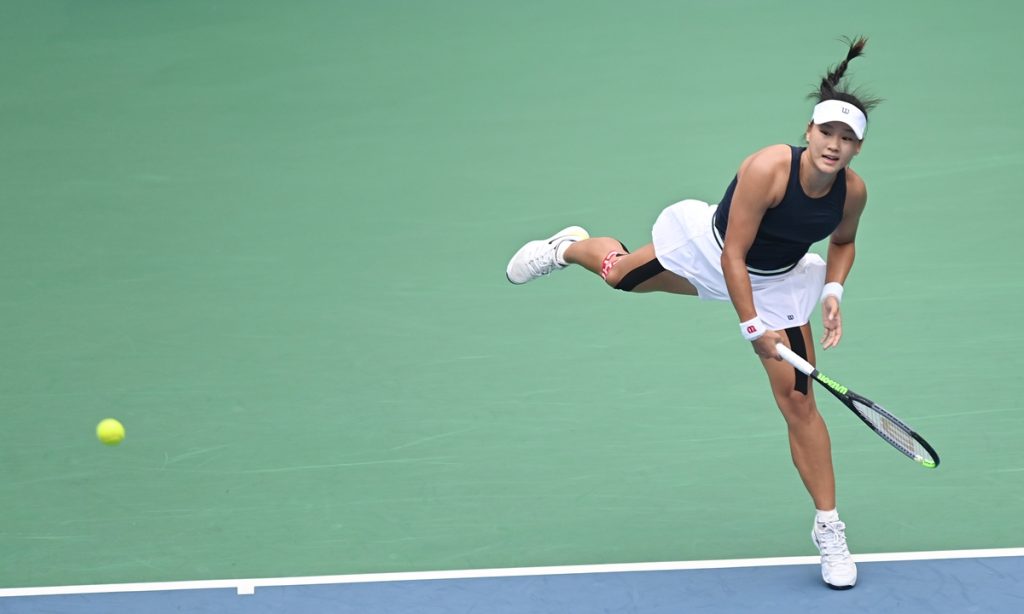
China's Guo Hanyu won the women's singles tennis gold medal at the FISU Games on Sunday by making a comeback victory over Chinese Taipei player Yang Ya-yi 2-6, 6-1,6-1
"The FISU Games have been fruitful for me," Guo told reporters after the match, as Sunday's win came on top of her silver medal in the women's doubles with teammate Jiang Xinyu on Saturday.
"I enjoyed the match today after seeing room for improvement in yesterday's defeat," said the Southwest University student athlete, who had won the doubles title in the previous FISU Games in 2019 in Napoli, Italy.
Guo was one of the two flagbearers for China at the opening ceremony of the FISU Games. She said it gave her more of a boost rather than pressure.
"It gives me a little pressure but more importantly impetus," Guo told the Global Times.
Guo played the match under the gaze of tennis great Zheng Jie, one of the Chinese female tennis trailblazers who won the Grand Slam doubles title at the Australian Open and the Wimbledon Championships in 2006.
Zheng, who is a Chengdu native and now a vice president of the Chinese Tennis Association (CTA), has been promoting tennis among the young generation in the recent years.
In 2010, she initiated youth tournaments with the aim of increasing the number of opportunities for young players to compete.
Over the past 14 years, the CTA has incorporated more than 90 youth tournaments into their ranking system, providing ample chances for aspiring young talents to showcase their skills.
"Nowadays, young Chinese tennis players, if they are willing to play, can find matches to play, which is something I never could even imagine during my playing career," Zheng told the Global Times.
Fans watching the game at the Sichuan International Tennis Center in Chengdu, capital of Southwest China's Sichuan Province, were troubled by the rain, as it has postponed the men's singles as well as pairs final.
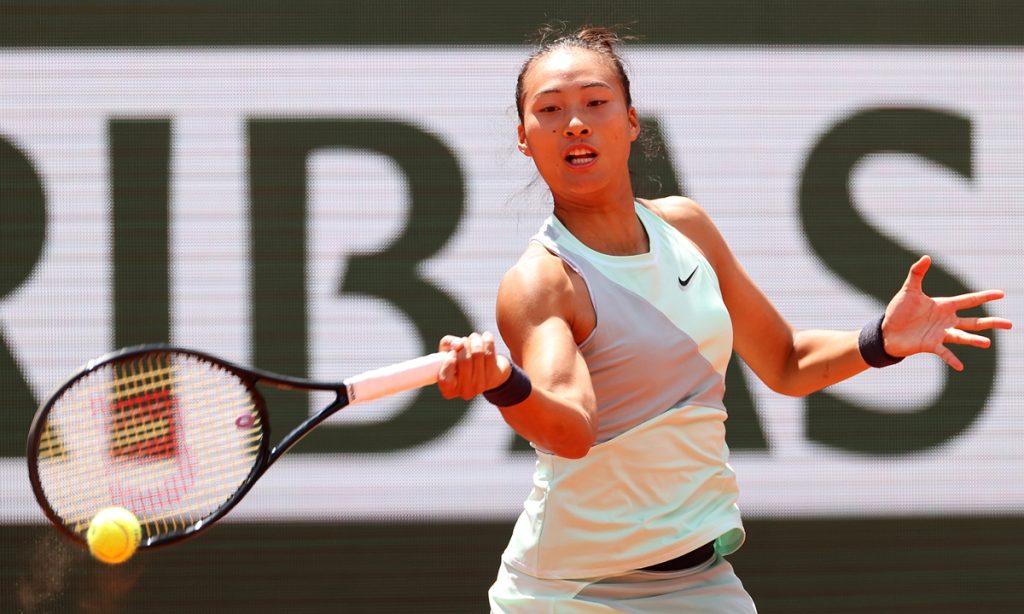
Rising star Zheng Qinwen became the youngest female from the Chinese mainland to make it into the quarterfinals of a Grand Slam event as she advanced to the last eight at the US Open Monday night.
The 20-year-old reached her first Grand Slam quarterfinal after ousting last year's runner-up and No.5 seed Ons Jabeur of Tunisia 6-2, 6-4.
The hard-hitting Zheng is the fourth Chinese woman to reach the US Open quarterfinals in the Open Era. It's also her first career victory over a world top 10 player at a Grand Slam event.
The No.23 seed will face incoming world No.1 Aryna Sabalenka of Belarus in the semifinals on Wednesday.
Thanks to her aggressive and dictating play, Zheng had already made a bit of history at Flushing Meadows as she and her compatriot Wang Xinyu both reached the Round of 16 at the same US Open.
"Honestly the feeling was fantastic, especially in that moment. I feel like this is an important win for me. Like you say, it's a breakthrough," said Zheng after the match.
She also attributed her recent strong run-of-form to her veteran coach Wim Fissette, who previously guided many players to Grand Slam titles including Kim Clijsters, Naomi Osaka and Angelique Kerber. Zheng started working with the legend coach before the grass season in June.
"He really helped me a lot. I feel like my mentality is more stable now. When I started working with him, I didn't have as many ups and downs as I did at the beginning of the year. And overall, I became more composed," said Zheng.
"You are the queen of the day," the US Open official account on Sina Weibo commented as she was nicknamed "Queenwen" in English.
Her stormy run into the quarterfinals also became a trending topic on Sina Weibo Tuesday morning with Chinese fans sending congratulations to the rising star.
"Please keep going! I hope you improve the efficiency of the first serve and maintain stability. Winning or not in the next round, you have a long career ahead," said one Sina Weibo user.
Zheng earned the WTA newcomer of the year award in 2022, winning her debut at all four Grand Slam events and reaching the French Open last 16 before losing in three sets to eventual champion Iga Swiatek of Poland.
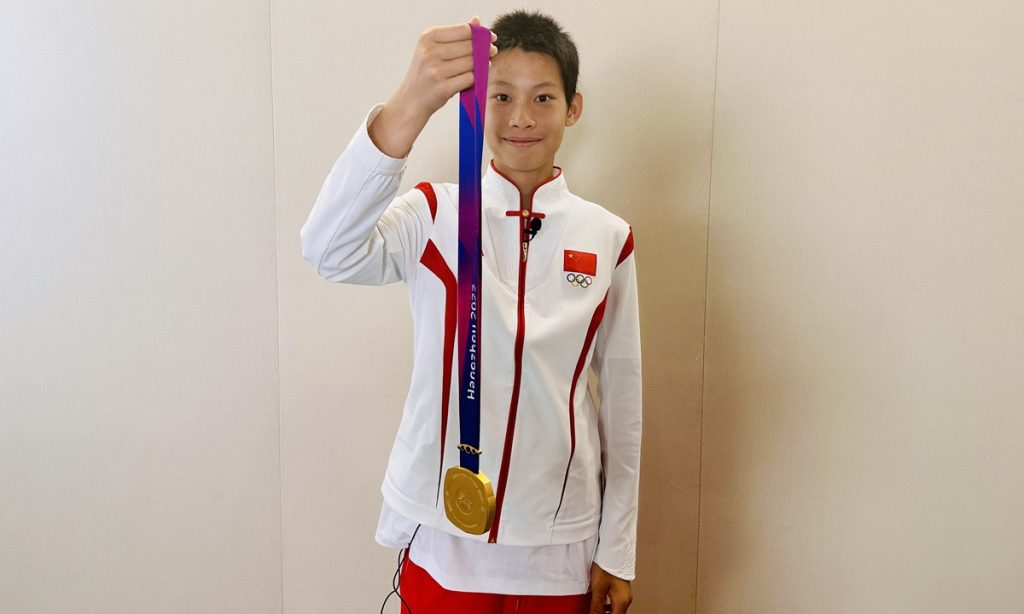
Fifteen-year-old Chen Ye has become the youngest Chinese champion in the history of the Asian Games after winning the skateboarding park men's finals in Hangzhou, East China's Zhejiang Province, on Monday, which is also the first gold medal for the Chinese team in the world championships for skateboarding.
After the game, the training ground made by Chen's father, which paved the way for this inspirational story, became the focus of media attention. In an interview with the Global Times on Tuesday, Chen expressed his gratitude to his father as the person he most wanted to thank after winning the gold medal.
"The Asian Games gold medal is the greatest medal I has received so far. I will use it as encouragement to continue striving for higher goals," he said.
"I'm grateful to my father for building two bowl training grounds for me and studying skateboarding skills with me," Chen said. Chen said that he fell in love with skateboarding when he first encountered the sport in a shopping mall at the age of 8.
"When I started skateboarding, I felt that it was a very exciting and thrilling sport. I felt very happy after completing each move," Chen said, comparing it to the piano and other hobbies that his father, Chen Wanqin, tried to introduce to him but which he found boring.
Once Chen Ye showed his true passion, his father, respected him the choice and supported him. In 2019, Chen Ye joined the Guangdong provincial skateboarding team. To help his son's training, Chen Wanqin and his wife rented a warehouse of more than 200 square meters to build a bowl training ground for him.
After finishing second in the men's skateboarding park event at the 2021 National Games of China, Chen Wanqin built a new 900-square-meter skateboard park with a max height of nine meters in 2022 in order to improve his son's performance. Chen Ye said that during that time, his father quit his job and even spent all his savings to support his passion.
But it was all worth it. After winning the Asian Games gold medal, Chen Ye now has the confidence to pursue higher goals.
"Now that I've won the championship in an Asian event, I hope to perform better in global events and participate in more high-level competitions. In the future, I may participate in more Olympic ranking events," Chen Ye said.
After entering the Paris Olympic cycle, the Chinese skateboarding team is not only preparing for the Asian Games, but also coordinating their preparations for the Olympic Games. It is worth mentioning that while Chen Ye snatched the championship, other Chinese athletes in the same event also made new breakthroughs. In the skateboarding park women's final held on Monday, Chinese athlete Li Yujuan won the silver medal, while Mao Jiasi won the bronze medal.
In addition, the Chinese skateboarding team has also seen the emergence of several young players with great potential in the Hangzhou Games. Apart from Chen Ye, 13-year-old Cui Chenxi is also considered a rising star. She is also the youngest athlete in the Hangzhou Asian Games Chinese delegation. The Chinese skateboarding team, composed of athletes born after the year of 2000, continues to make breakthroughs, and the future looks promising.
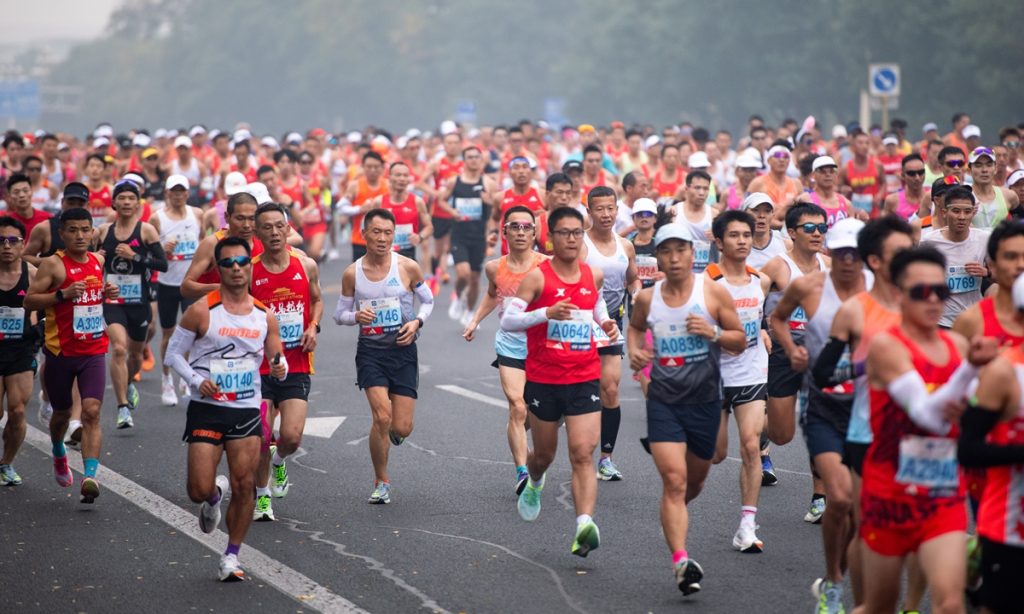
Some 30,000 runners competed in the Beijing Marathon in the early morning of Sunday, starting at the Tian'anmen Square in downtown Beijing.
The race in the Chinese capital, dubbed the country's flagship marathon, attracted over 130,000 runners to register for the 30,000-slot lucky draw, as all participants, regardless of athletic skill level, are required to take on the full distance of 42.195 kilometers.
Chinese runner Chen Tianyu brought fresh competition to the race traditionally dominated by elite African runners, as he finished in the overall seventh place with a time of 2:08:11. Geleta Ulfata of Ethiopia won the championship in 2:07:41.
Though the result, surpassing the previous best domestic time set by Ren Longyun of 2:08:15 in 2007, Chen's time was just one second short of seeing him qualify for the Paris Olympics. But it makes him the third-fastest Chinese runner of all time, following compatriots He Jie and Yang Shaohui who clocked in 2:07:30 and 2:07:49 respectively at the Wuxi Marathon in March 2023.
"My original goal was to finish in under 2 hours and 10 minutes, but I felt great when competing with the elite runners," Chen, who is no stranger to endurance races, told reporters after the race, before crediting the optimization of the racecourse that reduced turns and slopes that contributed to his achievement.
The racecourse for the Beijing Marathon, the oldest marathon in China as it inaugurated in 1981, is considered picturesque, as it features several iconic landmarks in the ancient and modern metropolis including the Military Museum of the Chinese People's Revolution and the CCTV Tower, before concluding at the Olympic Park near the Bird's Nest or the National Stadium where the opening ceremonies of the 2008 Olympic Games and 2022 Winter Olympic Games were held.
Tandem marathon races were also held on Sunday in a number of provincial capitals across China, including Xi'an, Northwest China's Shaanxi Province; Ji'nan, East China's Shandong Province; Zhengzhou, Central China's Henan Province; Changsha, Central China's Hunan Province as well as Chengdu, Southwest China's Sichuan Province.
Running fever
Before the COVID-19 pandemic, marathons had grown in popularity in China.
In 2018, China witnessed a marathon boom with 278 certified events held in the Chinese mainland, followed by a total of 330 races in 2019, before a 2020 dip to just 51 races, according to the Chinese Athletics Association (CAA).
World Athletics road running manager Alessio Punzi said earlier in October that 68 Chinese running events filed their applications to World Athletics in 2023, while a total of 133 road races across China were registered between January and June, according to the CAA.
For those unable to make it to the Beijing event, an online race was also held on the popular fitness tracking site Keep, where participants who finished a recorded marathon race elsewhere stood to win a commemorative medal. As of press time, nearly 30,000 people had registered in the online race.
Alongside an increase in the popularity of marathons in China is an increasingly health-conscious population in the country.
A 2020 National Fitness Activities Report released by the Beijing-based National Fitness Monitoring Center revealed that among adults, walking and running were the two most popular physical activities, accounting for 22.7 percent and 19.8 percent, respectively.
"Hosting marathon races could immediately boost local tourism and further stimulate local economic growth, as it is a good marketing tool which utilizes good word of mouth if the events are well organized," Mao Jiale, a Chengdu-based sports commentator, told the Global Times on Sunday.
"Nowadays fitness and health have taken root in people's hearts, as we see the number of people taking exercise growing, especially after the national policy on fitness was introduced."
Recent statistics show that the number of people who regularly participate in outdoor exercise in China currently exceeds 400 million.
Health concerns
Some fans raised concerns over the air quality in the Chinese capital on Sunday when the Beijing Marathon was held, as data from the China National Environmental Monitoring Centre designated it as "mild to middle pollution."
This is not the first time that organizers have had to contend with air quality issues.
It is, however, "extremely difficult" to reschedule the event as nearly half of the participants had made their way to Beijing from other cities across the country, an official with the organizing committee told the Global Times.
Jiang Chong, a physiotherapist who is also an occasional distance runner, warned that amateur distance runners should be aware of the consequences if they decide to participate in an ultramarathon.
"The path to marathon success is no walk in the park. Injuries to the hip, knee, and ankle joints are regularly suffered by marathon runners, as it is in fact a challenging endeavor to finish a marathon," Jiang told the Global Times.
"Targeted training in strength, speed, and endurance is paramount. Simply lacing up your running shoes without adequate preparation can lead to injuries that may prematurely end one's love affair with the sport."
She underlined that it takes scientific training, gradual progress, and setting achievable goals to successfully tackle the full 42.195-kilometer race.
"Warming up adequately before running, stretching after running, and training progressively are the foundations of consistent long-distance running," Jiang said.
"It is not only a matter of joints, but it also tests the effectiveness of the cardiovascular system. Regular medical checkups will also help to detect problems in time before worse problems occur."
How can art and culture from the past survive in a globalized world? While attempting to inherit the treasure of art and culture thousands of years old, young Chinese have created a new trend - Guochao, or China chic. It refers to a movement first started by young people endeavoring to revive and reinvent China's traditional culture.
Fashion designers have drawn inspiration from the precious murals inside the Yungang Grottoes, and traditional instrumentalists are creating new trendy music on the pipa. These young Guochao trendsetters have helped China's cultural legacies to be passed down and preserved for future generations.
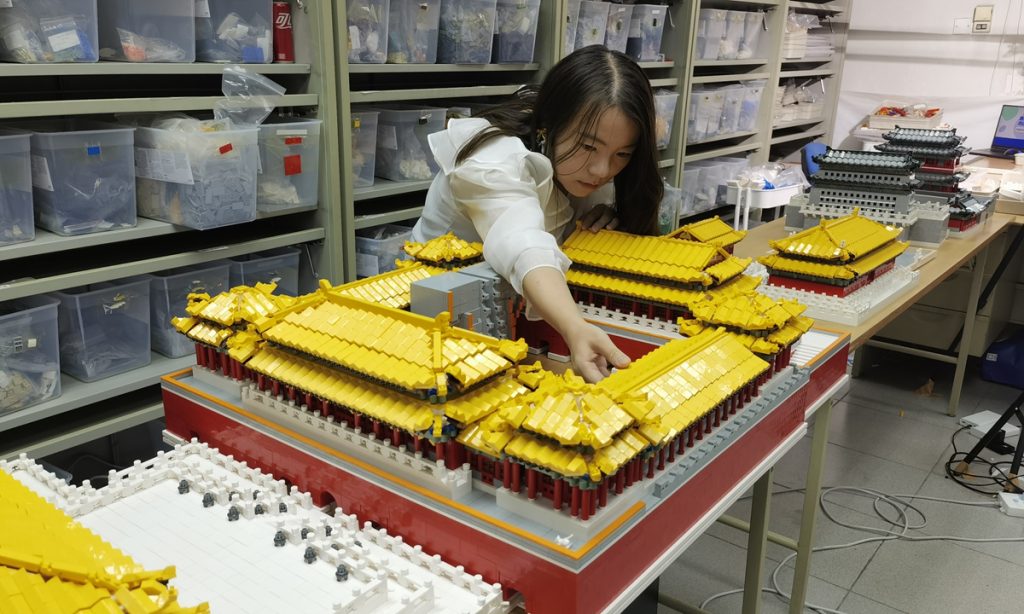
To better understand this new approach to cultural preservation, the Global Times has conducted a series of interviews with young innovators to learn about their interpretation of Chinese culture. In this installment, the art of recreating iconic Chinese buildings using building blocks is revealed. From Yongdingmen to Gulou and Zhonglou, 18 iconic landmarks along Beijing's Central Axis have been concentrated in a 16-meter-long panoramic building-block world. These works are produced by a millennial couple, Jiang Buting and Chen Xi, who spent 90 days using more than 130,000 building blocks to recreate the traditional buildings, with an aim to help boost the Beijing Central Axis' chances at gaining UNESCO World Heritage status.
"Building blocks are recognized globally for their recreational value, and we understand the building of building blocks as a borderless artistic language. Building blocks allow us to consider a new perspective on how to protect intangible cultural heritage and cultural relics in a new way, and spread traditional Chinese culture through this universally entertaining way, so that the charm of Chinese culture can be seen by the world," Jiang told the Global Times on Sunday. Conveying cultural connotation
The pair uploaded the footage of their creations on the video-sharing platform Bilibili, where many netizens expressed their admiration. However, the process was not easy.
Before the assembling process could begin, a lot of preparation had to be done. First, they used computer-aided design (CAD) software to convert the survey map into a three-dimensional model and then used the actual image and converted measurements from CAD to virtually assemble the building-block models.
After the virtual assembly was completed, the software generated a list of parts to be used numbering in the tens of thousands, that had to be sorted and assembled. Jiang told the Global Times that one of the difficulties was how to use fixed-shape blocks to show the spiritual essence of traditional Chinese architecture.
"For example, we will use white ice cream-shaped parts to restore the appearance of pillars, and black banana parts to restore the roof overhang," Jiang said.
The other difficulty is how to use building blocks, a modern material, to interpret and express the construction logic and wisdom of ancient Chinese architecture, truly conveying its cultural connotation.
When restoring the Jiaolou, they did not add a pillar to support the indoor space, following the original construction logic of the building, although it was not easy to see in the model.
"We not only restore the appearance of these buildings, but also try to use building blocks as modern material to restore Chinese ancient architecture in a way that truly shows its construction logic and wisdom," Jiang noted. "We think we can create any scene we want with building blocks."
The pair has undertaken many building-block recreation projects, including China's aerospace aviation series, Tsinghua University's 100th anniversary celebration building series, Big Air Shougang, the Beijing 2022 Winter Olympics open-air event venue, and many animation scene restorations, novel-themed builds, and so on. Indispensable part
"When we go to visit Yuanmingyuan today, we can only see the remains of buildings destroyed by fire. In order to restore them, we needed to read a lot of historical records about the scenes to recreate them," he said.
In the Yuanmingyuan restoration process video, not only are there ancient buildings, hills, and trees shown, but people are also incorporated as an indispensable part of the recreated landscapes, with every detail vibrant and well-executed.
"We choose to use building blocks to interpret traditional Chinese culture, because they are a material that is suitable for all ages and can be used by everyone. The simple and rich connection methods greatly encourage more people to participate enthusiastically," Jiang said.
This year marks the 10th anniversary of the Belt and Road Initiative (BRI). The pair used building blocks to recreate the ship used by legendary Chinese navigator Zheng He on his voyages to the coast of East Africa.
In 2022, the couple recreated the pavilion described in the Zuiwengting Ji, a famous essay by Ouyang Xiu (1007-1072).
In addition to the pavilion, they incorporated fishermen on the lakeside, woodsmen chopping down trees on the mountainside, farmers making wine in a wine cellar, and guests playing chess or shooting putts in front of screens.
According to Jiang, the couple is planning to recreate the scene described in The Peach Blossom Spring Story written by Jin Dynasty (265-420) poet Tao Yuanming of an ethereal utopia as described in the tale.
"We believe that wider public participation can turn cultural dissemination into a phenomenon, and more and more people will participate, co-create, and spread Chinese culture through this way, to make ancient Chinese architecture truly available to thousands of households," Jiang said.
The Vietnamese version of China's hit reality show Sisters Who Make Waves has recently been released on the country's national television platform VTV3 and sites like YouTube. The show is crowded with Vietnam's hottest celebrities and has become highly popular, attracting a wide range of local viewers. The original show made a similar splash in the Chinese entertainment market when it was first released in 2020.
The Chinese version included stars like Zhang Yuqi, who has gained over 13 million viewers on China's Sina Weibo, and the Vietnamese show is star-studded as well. 53-year-old Vietnamese singer Hồng Nhung has joined the show, along with actress Ninh Dương Lan Ngọc and model H'Hen Niê.
Wanghe Minjun, a TV industry expert, told the Global Times that celebrities on the show need to be successful women, but also need to have contrasting personalities.
"Like all reality shows, the program needs tension and something that can spur discussion," said the expert, such as "a woman who has been to red carpet events many times but still remains childish in everyday life."
The show has become popular on YouTube, with an episode released two weeks ago having been viewed by 4.97 million viewers.
"A singer can connect with listeners' emotions through her voice. Listening to Hồng Nhung is like watching a movie unfold in my mind. I'm impressed that her skill is increasing as she gets older," a Vietnamese netizen said in a post on YouTube.
Xu Shuming, a cultural sociologist, told the Global Times that Sisters Who Make Waves is actually an "encouraging show that gives the audience an image of modern women's potential in the social sphere."
"Compared to shows about young idols, ones about mature and successful women can be more eye-catching since they can draw the attention of a larger group of people," Xu told the Global Times.
Vietnamese actress and singer Chi Pu joined the original Chinese show for its 2023 season and became widely popular with domestic viewers.
Her appearance on the show reassured the international market about the "universal acceptance of the subject of women's power," Wanghe told the Global Times. Chi Pu's Chinese journey was also significant for the later Vietnamese adaptation.
The original Chinese version is available on China's video platform Mango TV, which collaborated with Vietnamese platforms VTV3 and YeaH1 Group, as well as production company STV Production.
"With the advantages of multiple platforms and a large audience, we are confident in creating a reality show that will be successful in the Vietnamese entertainment market in 2023," Le Phuong Thao, the chief investment representative of YeaH1 Group, told the media.
So far, the Vietnamese version of Sisters Who Make Waves has attracted a total of 33 sponsors, the highest ever for a Vietnamese reality TV show.
The show's international success also indicates that the burgeoning Chinese entertainment industry is able to produce cultural IP of a "global standard," Wanghe said.
Other Chinese reality shows like Street Dance of China and Our Songs, a singing program, have also been adapted into Vietnamese and Spanish versions. The singing program Super Vocal has also been brought to audiences in North America.
"Chinese IP is good not only because of the shows' creativity, but also the growing Chinese entertainment industry. Its scale has convinced many international insiders," Wanghe told the Global Times.
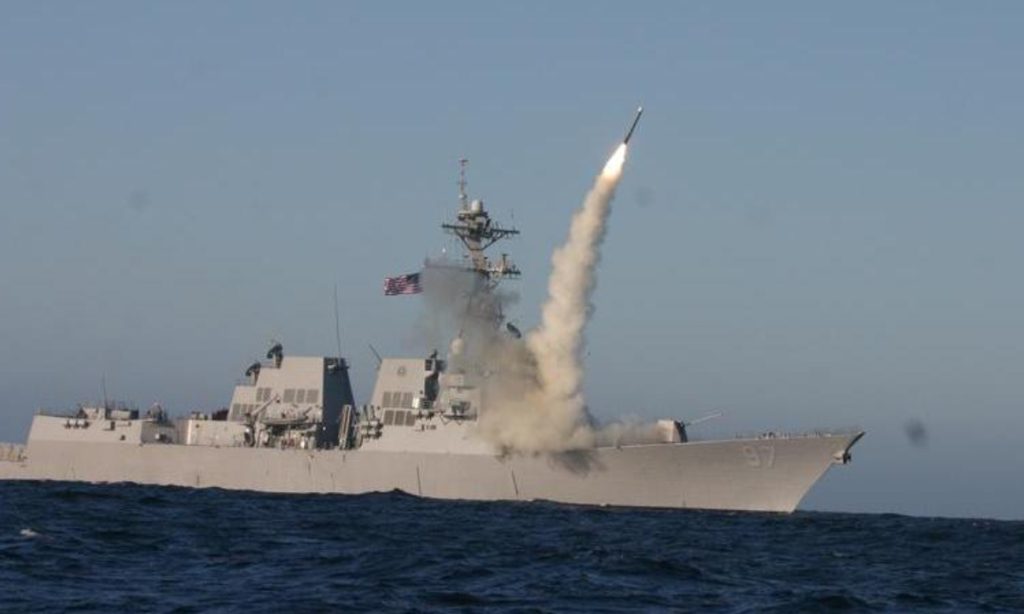
Japan will start procuring Tomahawk cruise missiles from the US in fiscal year 2025, a year earlier than initially planned, Japan's defense minister Minoru Kihara announced on Wednesday at a press event in Washington after holding his first face-to-face talks with his US counterpart Lloyd Austin, the Kyodo News reported. Chinese military observers warned that if Japan intends to target other countries, it will also be included in the scope of potential counterstrikes. Moreover, the US' plan to deploy Tomahawk cruise missiles on its allies in the Asia-Pacific region, targeted at China, is an underestimation, and will ultimately be futile.
As part of preparations to acquire "counterstrike" capabilities, or the ability to hit enemy bases should the need arise, Japan plans to purchase 400 Tomahawks, which have a strike range of around 1,600 kilometers.
The defense chiefs "shared the recognition" that the procurement of Tomahawk Block-4 missiles will begin in the fiscal year starting in April 2025, the Kyodo News cited a Japanese official as saying, noting that the purchase still needs to be approved by the US Congress, with both sides, for this reason, refraining from calling it formally "agreed."
Tomahawks, first used in the 1991 Persian Gulf War, are allegedly able to cover Chinese coastal areas and are deemed essential by Japanese officials to beef up Tokyo's defense capabilities until Japan deploys home-developed ones.
Japan's deployment of Tomahawk missiles from the US aims to strengthens its ability to launch preemptive strikes and enhances military cooperation with the Washington, Song Zhongping, a Chinese military expert and TV commentator, told the Global Times on Thursday.
He explained that the sale of Tomahawk cruise missiles to Japan primarily focuses on their deployment on Aegis-equipped warships.
Chinese observers believe the US allows Japan to rearm itself and is helping Japan to acquire long-range attack capabilities to turn Japan into a more important pawn against China, while Japan wants to help the US to fight China in a bid to realize the "normalization" of its national defense force and achieve large-scale military expansion.
However, if Japan dares to launch attacks on other countries at sea, its own territory will also become a target for retaliation, therefore, Japan should not miscalculate and think that it can use weapons and equipment without facing consequences, Song warned.
In August, Australia announced it would spent $833 million to boost its long-range strike capabilities as it finalized a deal to buy more than 200 Tomahawk cruise missiles from the US, making it one of the three countries to have Tomahawks along with the US and the UK.
Experts said deploying Tomahawk missiles in allies reflected the US ambition of beefing up its military strength in the Asia-Pacific region and speeding up the construction of a "Tomahawk missile encirclement circle" targeting China.
Both Australia and Japan will undoubtedly face retaliation if they use their missiles to threaten the homelands of other countries. Both countries need to ask themselves what is more important: serving as pawns to maintain US hegemony or ensuring the security of their own nations? Song said.
The military expert also noted that countries daydreaming about forming an encirclement of China are overestimating their capacities, Song noted.
Although the UN General Assembly adopted a resolution on Friday on Gaza which calls for an immediate and sustained humanitarian truce leading to a cessation of hostilities, Israel still launched the second phase of its war against the Gaza Strip, bringing death toll on Palestine side since the war to nearly 8,000, mostly civilians including women and children.
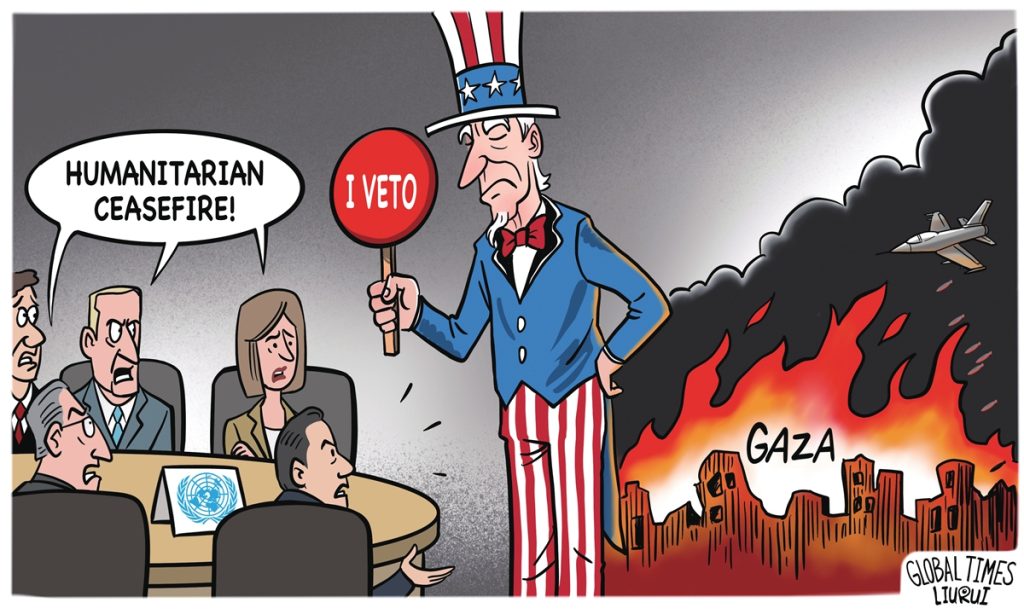
Chinese analysts said that despite mounting pressure from the vast majority of the international community to stop the bloodshed, the international community is failing in its efforts because the US, a permanent member of UN Security Council with veto power and the protector of Israel in this region, has gone to great lengths to pave the way for a ground attack in the name of "counterterrorism" and "self-defense" of Israel and with the fast rising death toll, the conflict is likely to spill over to the whole Middle East.
On Friday, by a recorded vote of 121 in favor to 14 against, with 44 abstentions, the UN General Assembly adopted a resolution titled "Protection of civilians and upholding legal and humanitarian obligations," with countries including China, Russia, France, as well as Arab and Muslim countries, voting in favor, and even close US allies like the UK and Japan abstaining, while the US, Israel and a few other countries voted against.
The US has asked for China's help to prevent escalation of the crisis during US Senate majority leader Chuck Schumer's trip to China earlier this month, and during the latest meeting with Chinese Foreign Minister Wang Yi in the US, Secretary of State Antony Blinken expressed the view that there is a need to return to and implement the two-state solution, which is in line with China's stance about political solution of the Palestine-Israel issue.
However, according to the votes in the UN General Assembly and the Security Council, it shows that Washington holds a very different position compared not only to China but also to the vast majority of the international community in terms of a humanitarian truce, so to what extent China and the US can work together in stopping the crisis is still in question, as experts said this can happen only when Washington realizes that it should not stand on the wrong side of the history.
Long and difficult war
Israeli Prime Minister Benjamin Netanyahu told the nation on Saturday night that the military has opened a "second stage" in the "war against Hamas" by sending ground forces into Gaza and expanding attacks from the ground, air and sea, and he warned that the war will be "long and difficult," per Associated Press report.
The AP reported on Sunday that Gaza residents described the massive bombardment from the land, air and sea as "the most intense" of the three-week Israel-Hamas war. It knocked out most communications in the territory late on Friday and largely cut off the besieged enclave's 2.3 million people from the world.
According to Palestine's state TV on Sunday, the death toll from the relentless Israeli bombing of Gaza and clashes in the West Bank since October 7 has risen to 7,814, the Anadolu Agency reported. It said in a statement that 21,693 others were wounded as a result of Israel's actions "against our people."
Liu Zhongmin, a professor at the Middle East Studies Institute of Shanghai International Studies University, told the Global Times on Sunday that once Israeli forces launch a ground attack that aims at a long-term occupation of some areas of Gaza and seeking the complete elimination of Hamas, "the death toll will rise much more sharply than at present."
Street combat will be extremely brutal, the bombardments will be more intense, and due to the blockade, more civilians and the wounded will die because of the shortage of medicines, food and water. Israeli forces will also sustain heavy casualties because by using their network of tunnels, Hamas is capable of inflicting significant casualties on Israeli forces, Liu said.
With the rising death toll, the pressure on Israel and the US will rise as well, and if Israel's military offensive results in more casualties of Palestinian civilians, regional major powers like Iran and Saudi Arabia, as well as those who have already established diplomatic ties with Israel like Turkey and Egypt, will take further actions, said Wang Jin, an associate professor at the Institute of Middle Eastern Studies of Northwest University.
"Even though some of them might be reluctant to get involved, the fury among their nationals will force them to take actions, as helping Palestinians resist Israel is the shared and top political correctness among the Muslim world," Wang Jin noted.
Furies from Muslim world
Iranian President Ebrahim Raisi said in a statement on X (formerly known as Twitter) on Sunday that the "Zionist regime's crimes have crossed the red lines, which may force everyone to take action. Washington asks us to not do anything, but they keep giving widespread support to Israel. The US sent messages to the Axis of Resistance but received a clear response on the battlefield."
Turkish President Recep Tayyip Erdogan said at a huge rally in Istanbul on Saturday that "Israel, you are an occupier" and he accused the Israeli government of behaving like a "war criminal" and trying to "eradicate" Palestinians, according to media reports. "Of course, every country has the right to defend itself. But where is the justice in this case? There is no justice - just a vicious massacre happening in Gaza." After this, Israel said Saturday it was recalling its diplomatic staff from Turkey, media reported.
Saudi Arabia's foreign ministry denounced Israeli ground operations in Gaza in a statement released on Sunday on X, which it said would threaten the lives of Palestinian civilians and result in inhumane dangers.
The kingdom, which was heading toward normalizing relations with Israel before this round of conflict, warns of the danger of continuing to carry out these flagrant and unjustified violations that are contrary to international law."
On Thursday, the United Arab Emirates, Jordan, Bahrain, Saudi Arabia, Oman, Qatar, Kuwait, Egypt and Morocco, in a joint statement, condemned the targeting of civilians and the "flagrant violations of international law" in Gaza.
Iran, which considers Israel as an enemy, is likely to take more direct action to support forces like Hezbollah in Lebanon and the Houthi movement in Yemen, and Saudi Arabia, Turkey and Egypt are likely to allow and encourage NGOs and other groups to break through the Israel's blockade of Gaza to provide humanitarian supplies to the Palestinians in the region, experts said.
Israel is facing a tough situation, as the war will not end in the short term as long as it insists on eliminating Hamas, and the casualties will increase terribly on both sides. However, if it stops the operation and accepts a truce, it will face huge pressures domestically, and the US will also share these problems, pressures and embarrassments with Israel before the end of the bloodshed, Chinese analysts noted.
Chargée d'Affaires Sophie Hottat at the Belgian Embassy in China visited the M Woods Museum in the 798 art district, Beijing, to take part in the opening ceremony of the first solo exhibition in China of Belgian artist Ann Veronica Janssens titled "pinkyellowblue."
Ann Veronica Janssens was born in 1956 in Folkestone, the United Kingdom.
Janssens studied at the Brussels National School for Visual Arts of La Cambre, then permanently settled in Brussels where she has since been creating art for exhibitions all over the world. Janssens' works vary from sculptures to installations, videos, and even photos. Hottat noted the role of art in fostering connections between cultures and peoples: Art, and more specifically Janssens's art, does not need a knowledge of any language or cultural background to be understood. As such, it holds the inherent power to build bridges between cultures that are vastly different, especially when cultural and people-to-people contacts are difficult.